Packing your bags for a well-earned break? Before you head to the airport, there’s one more thing to tick off your list: making sure your home isn’t quietly burning through electricity while you’re away. A few smart decisions before you leave can save you money on electricity, protect your home from Cayman’s heat and humidity, and help you return to a comfortable space without wasting energy. This pre-vacation checklist is built for Cayman homeowners who want to reduce electricity use while on vacation without risking an uncomfortable or overly humid home.
Let’s walk through what to do before you lock the door.
Why vacation energy planning matters in the Cayman Islands
Leaving your home unattended in a tropical climate comes with unique challenges. High temperatures and humidity mean you can’t simply switch everything off and hope for the best.
But that doesn’t mean you should leave everything running at full power either. Many appliances and devices continue to draw electricity even when you’re not using them. Over a week or two, that adds up.
The goal is balance. You want to reduce electricity consumption without creating conditions that could damage your home or make your return miserable. A little planning goes a long way.
Managing Your A/C While You’re Away
Turning your air conditioning off completely is the most effective way to reduce electricity use while you’re away. However, for longer trips, some homeowners may prefer to leave their system running at a higher temperature.
This can help protect house plants, keep pets comfortable if they remain at home, reduce prolonged indoor heat that may affect finishes such as wallpaper, and avoid returning to an excessively hot house. If you choose to leave your A/C on while you’re away, CUC recommends using a smart thermostat where possible. This allows you to maintain the recommended temperature while the home is unoccupied and adjust your settings remotely before you return, helping you balance comfort, humidity control, and energy savings.
Best thermostat habits for a hot and humid climate
The smart move? Adjust your thermostat to a higher temperature rather than switching it off. CUC recommends setting your thermostat to 78°F (26°C) when you’re at home for comfort and efficiency, and 87°F (31°C) when the home is unoccupied. Maintain indoor humidity around 55% or use the recommended humidity setting on a smart thermostat. These settings help reduce electricity use while continuing to manage indoor conditions. This keeps the air circulating and prevents humidity from building up, but uses far less electricity than your usual comfort setting.
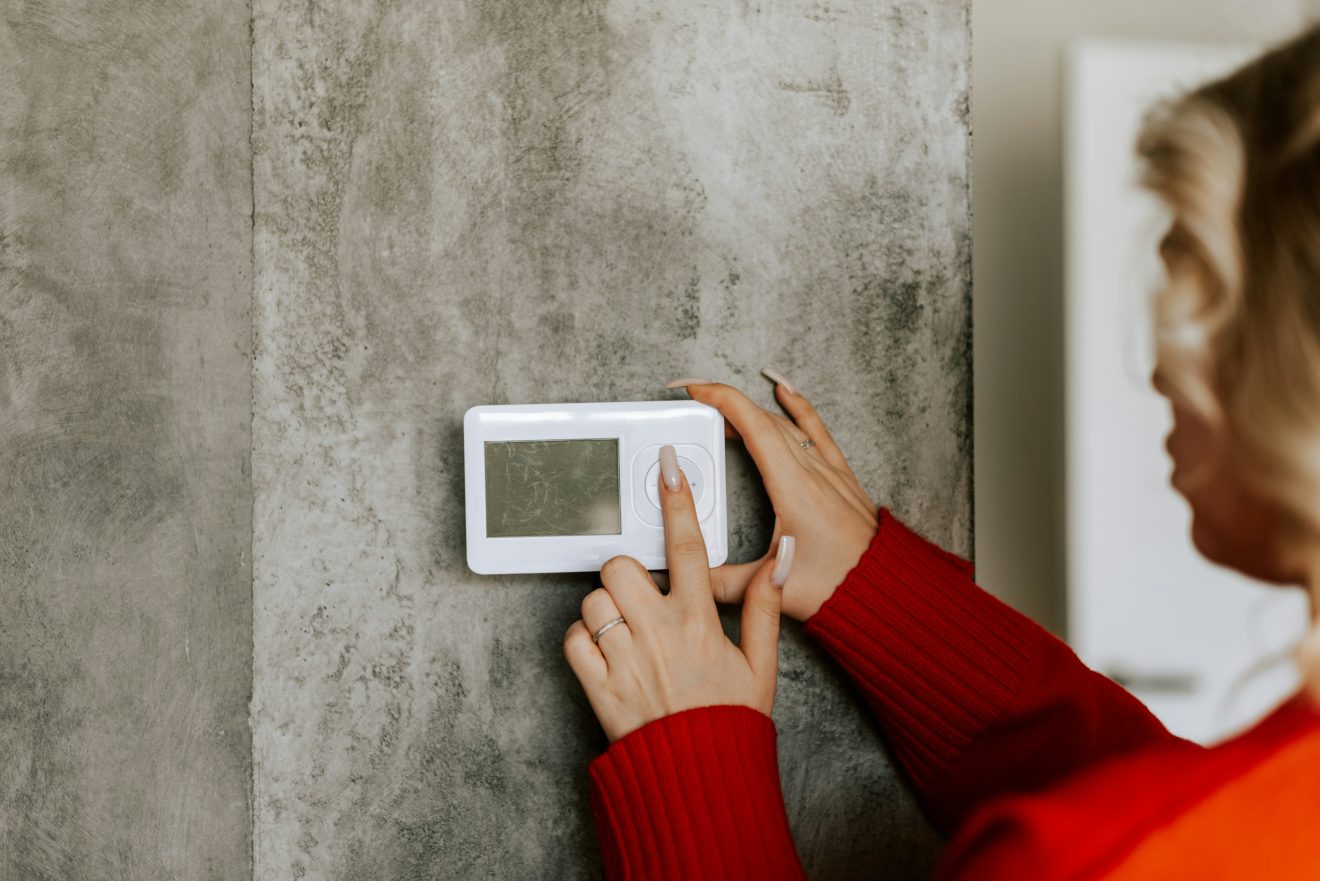
A smart thermostat is one of the easiest ways to manage your home’s energy use while you’re away. It allows you to set CUC’s recommended temperatures before you leave and adjust them remotely if your travel plans change.
If you have a programmable thermostat or smart thermostat, you can schedule it to cool down a few hours before you return home, so you walk into comfort without running it at full blast the entire time you’re away.
These simple adjustments are some of the most effective ways to reduce electricity use while on vacation without compromising your home’s condition. Air conditioning is the largest contributor to residential electricity consumption in the Cayman Islands, setting your thermostat correctly can make a meaningful difference to both comfort and energy use.
Humidity control goes beyond your thermostat
Keeping your home at the right humidity level involves more than adjusting the thermostat. CUC recommends maintaining indoor humidity at around 55%, or using the recommended humidity setting if your smart thermostat includes humidity controls. Proper humidity management also depends on having an air conditioning system that is correctly sized for your home, regular A/C maintenance, well-sealed windows and doors, and adequate insulation. When these elements work together, your system can remove moisture more effectively, helping improve comfort, reduce the risk of condensation and mould, and support more efficient energy use.
It’s also important to remember that humidity is not the only cause of mould. An air conditioning system that is too large for your home can cool the space too quickly without running long enough to remove moisture from the air. This can leave humidity levels higher than expected, increasing the risk of condensation and mould growth even when the temperature feels comfortable. Proper system sizing is an important part of maintaining a healthy indoor environment.
Regular A/C maintenance is just as important as choosing the right thermostat settings. CUC recommends having your air conditioning system serviced every quarter. As part of each service, ask your HVAC technician to check for signs of condensation, inspect and clean the condensate drain pan and drain line, and confirm these checks are included as part of the standard maintenance. Keeping your system clean and operating properly helps improve humidity control, supports energy efficiency, and can reduce the risk of mould developing over time.
What to unplug or switch off before vacation
Even when devices are turned off, many still draw power. These phantom loads quietly waste electricity and cost you money.
Common phantom loads that quietly waste electricity
Look around your home. Chargers, TVs, gaming consoles, computers, printers, coffee makers, microwaves, and entertainment systems all consume electricity even in standby mode. Before you leave, unplug them. It takes a few minutes and can make a noticeable difference to your electricity consumption over a week or two.
If unplugging individual devices feels tedious, use power strips. Plug multiple devices into one strip, then switch it off before you go. One flick, multiple savings.
Water heater, lighting and appliance checks
Your water heater is another major electricity user. If you’re away for more than a few days, there’s no reason to keep heating water no one will use. Switch it off at the breaker or use the dedicated switch if your unit has one. You’ll save energy and reduce wear on the heater. When you return, switch it back on and give it an hour or two to reheat before you need hot water.
For lighting, turn off all indoor lights. If you’re concerned about security, use a timer for one or two lights rather than leaving them on 24/7. Timers use minimal electricity and create the appearance of someone being home without the constant drain.
Check your outdoor lighting too. If you have motion-sensor lights, leave them on. If not, consider switching to a timer or turning them off entirely.
Your pre-vacation electricity checklist

Here’s a quick rundown to make your final walkthrough easier.
A last-minute checklist before heading to the airport
- If using your A/C while away, set your smart thermostat to 87°F (31°C) and maintain humidity at around 55%, or use the recommended humidity setting.
- Unplug chargers, TVs, computers, and other standby devices.
- Switch off your water heater.
- Turn off all indoor lights or use timers for security lighting.
- Check outdoor lighting and adjust timers or motion sensors if needed.
- Unplug small appliances like coffee makers, toasters, and microwaves.
- Double check that ovens, stoves, and irons are switched off.
- Ensure valuable electronics are protected with surge protectors where appropriate.
- Lock all windows and doors securely to help maintain indoor temperature and humidity.
Run through this list before you leave, and you’ll reduce electricity use while on vacation without worrying about what’s happening at home.
How to come home to comfort without wasting energy
You’ve done the work before you left. Now, how do you return to a comfortable home without undoing all that effort?
If you have a smart thermostat, schedule it to lower the temperature a few hours before you arrive. If not, resist the urge to crank the A/C down to 68°F (20°C) the moment you walk in. Set it to your usual comfortable temperature and let it work gradually. Extreme settings don’t cool your home faster, they just use more electricity.
Switch your water heater back on as soon as you get home. Within an hour or two, you’ll have hot water ready. Plug devices back in as you need them, not all at once. You might find you don’t miss some of them as much as you thought.
Save energy, save money, protect your home
Preparing your home before you travel is about more than lowering your electricity bill. The right thermostat settings, a well-maintained air conditioning system, and a few simple checks before you leave can help reduce electricity consumption, manage indoor humidity, minimise the risk of mould, and protect your home while you’re away.
Since air conditioning accounts for the largest share of residential electricity use in the Cayman Islands, small adjustments can make a meaningful difference to both comfort and energy costs. Combined with regular A/C maintenance, the right-sized system, and good home insulation, these habits support a more energy-efficient home throughout the year.
For more practical advice on managing your home’s energy use, explore CUC’s energy-saving resources and discover simple ways to improve comfort, reduce energy costs, and use electricity more efficiently all year round.