Hurricane season in the Cayman Islands runs from June through November. At CUC, hurricane preparedness isn’t a seasonal checklist. It’s year-round planning, infrastructure hardening, and coordination with emergency services to keep the lights on or get them back on as quickly as possible when storms hit.
This guide covers what CUC does behind the scenes to prepare for hurricanes and the practical steps you can take to protect your home, family, and property before, during, and after a storm.
What CUC does to prepare for hurricane season
CUC’s hurricane preparation starts long before the first tropical wave forms.
Infrastructure hardening and maintenance
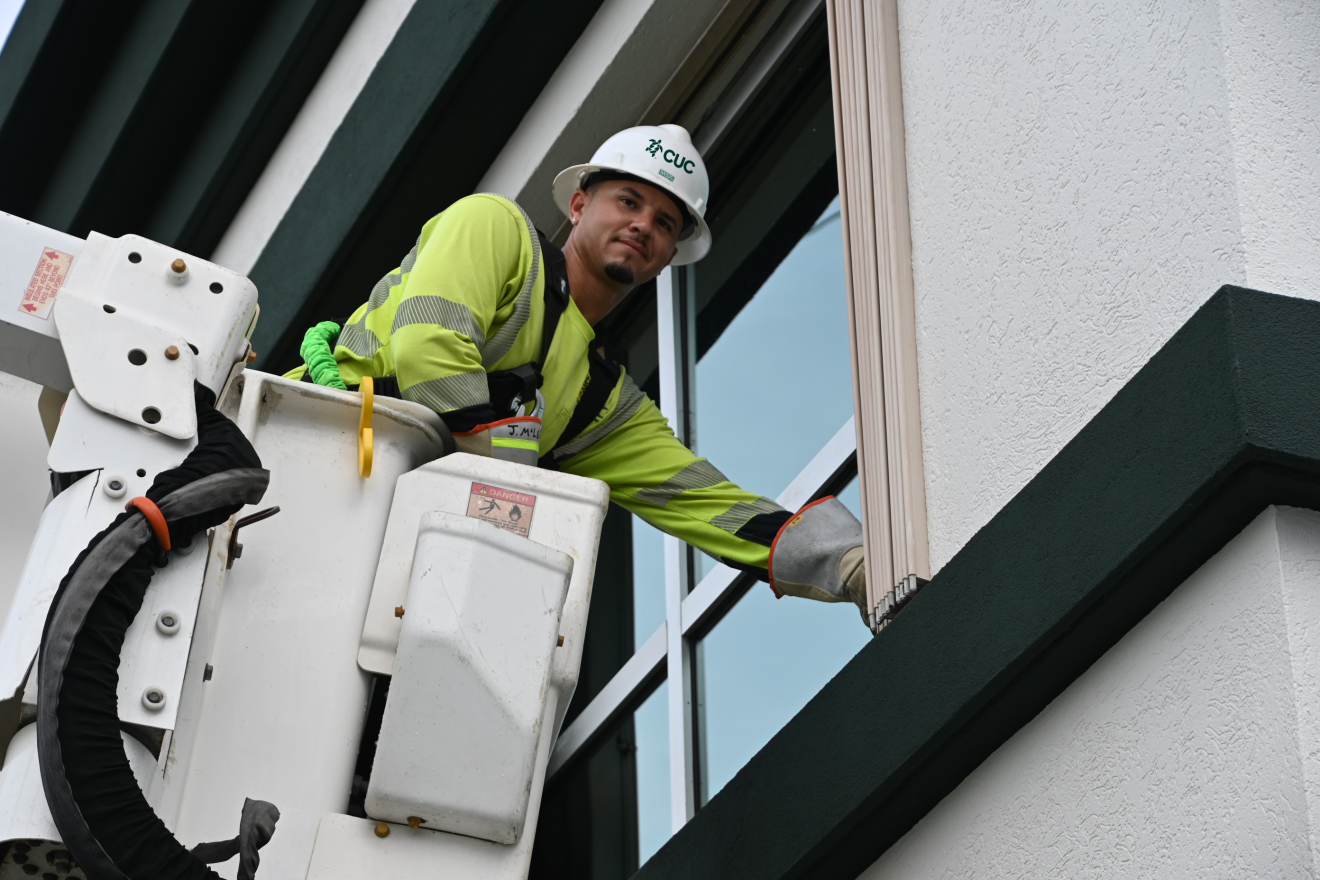
The electrical grid can take a beating during hurricane season. High winds, flying debris, and storm surge can damage poles, lines, and substations. CUC runs year-round maintenance programmes to strengthen infrastructure. That includes trimming vegetation near power lines, inspecting poles and transformers, and replacing ageing equipment before it becomes a liability during a storm.
Pre-storm operational readiness
When a hurricane threatens the Cayman Islands, CUC activates its emergency operations plan. That means:
- Securing equipment and materials that could become projectiles
- Ensuring that the public knows what to expect from CUC, pre and post storm
- Coordinating with the National Emergency Operations Centre
- Staging crews and equipment for rapid deployment after the storm passes
CUC, as a Fortis subsidiary, also has access to additional crews from overseas utilities after major storms hit. More hands mean faster restoration once it’s safe to work.
Storm restoration process
After a hurricane, CUC follows a structured storm restoration process. Safety comes first. Crews will not be given approval to begin the restoration process until the official utility all clear has been provided by the Cayman Islands Hazard Management.
Restoration happens in phases:
- Assess damage across the grid
- Restore the North Sound Power Plant as the primary source of power production
- Transmission lines are assessed and restored
- Power is restored to emergency services
- Restoration to individual homes and business are restored
Critical facilities like hospitals, water treatment plants, and emergency services get priority. From there, crews work systematically to restore power to neighbourhoods and individual homes.
How customers can prepare for a hurricane

You can’t control the weather, but you can control how ready you are when a storm arrives.
Before hurricane season starts
Preparation works best when it’s not rushed.
Handle these tasks before a storm is in the forecast:
Create a hurricane kit. Stock water, non-perishable food, medications, batteries, torches, a battery-powered radio, and cash. Assume you’ll be without power for several days.
Review your insurance. Check that your home and contents insurance covers hurricane damage. Update coverage if needed.
Trim trees and secure outdoor items. Remove dead branches near your home. Identify anything in your garden that could become a projectile in high winds (furniture, grills, plant pots, tools). Customers are encouraged to contact CUC if assistance is needed for trimming trees near power lines.
Know your evacuation zone. If you live in a flood-prone or low-lying area, know where you’ll go if evacuation orders are issued.
When a hurricane watch is issued
A hurricane watch means conditions are possible within 48 hours. This is when you move from planning to action.
Secure your property. Bring outdoor furniture, grills, and decorations inside. Board up windows if you have shutters or plywood ready. Secure doors.
Charge devices. Fully charge mobile phones, laptops, tablets, and portable battery packs. Download offline maps and emergency apps.
Fill your vehicle with fuel. Petrol stations may close or run out of fuel as the storm approaches.
Check your generator. Make sure it is properly installed and operating safely. Never connect a generator directly to your home’s electrical system unless it has been properly installed by a qualified professional.
Withdraw cash. ATMs and card machines won’t work without power.
Stock up on essentials. Make sure you have enough water and provisions to last you a few days.
When a hurricane warning is issued
A hurricane warning means conditions are expected within 36 hours. Time to finish preparations and shelter in place.
Turn off major appliances. Unplug electronics, computers, and appliances to protect them from power surges when electricity is restored.
Turn your fridge and freezer to the coldest setting. This helps food stay cold longer if power goes out. Keep doors closed during the outage.
Fill bathtubs and containers with water. You’ll need water for flushing toilets and washing if supply is interrupted.
Locate your hurricane kit. Keep it somewhere accessible. Include important documents in waterproof bags.
Stay informed. Monitor local radio, television, or the Cayman Islands Government’s emergency channels for updates.
During the storm
Once the hurricane arrives, your job is to stay safe.
Stay indoors. Don’t go outside during the storm, even if it seems calm. You might be in the eye, with more wind and rain to come.
Stay away from windows. Move to an interior room on the lowest floor if possible.
Don’t touch downed power lines. Assume every downed line is live. Stay at least 10 metres away and report it to CUC once it’s safe to do so.
Generator safety: what you need to know
Generators can keep essential appliances running during an outage, but they’re also dangerous if used incorrectly.
Safe generator operation
Never run a generator indoors or in an enclosed space. Generators produce carbon monoxide, an odourless, deadly gas. Run them outside, at least three metres from windows, doors, and vents.
Use a transfer switch. A transfer switch prevents backfeed, which can electrocute utility workers restoring power to your area. Never plug a generator directly into a wall socket.
Refuel carefully. Turn off the generator and let it cool before refuelling. Petrol spilled on a hot engine can ignite.
Don’t overload your generator. Only connect essential appliances. Overloading can damage the generator or the appliances.
Keep it dry. Run your generator on a dry surface under an open, canopy-like structure. Never operate it in the rain or wet conditions without proper cover.
After the storm passes
The storm may be over, but hazards remain.
Wait for the all-clear. Don’t go outside until local authorities confirm it’s safe.
Avoid floodwater. Floodwater can hide downed power lines, sharp debris, and contaminants. Don’t walk or drive through it.
Report outages and hazards. If your power is out, report it to CUC. If you see downed lines, damaged poles, or other electrical hazards, report those immediately.
Don’t attempt DIY electrical repairs. Leave all repairs to qualified electricians and CUC crews.
Check your property carefully. Look for structural damage, gas leaks, and electrical issues before re-entering your home.
Be patient. Restoration takes time, especially after a major storm. CUC crews will be working around the clock, but some areas take longer to restore than others depending on damage severity and access.
Staying informed during hurricane season
Preparation is half the battle. The other half is staying informed.
Monitor these sources during hurricane season:
- Cayman Islands Government emergency channels for official updates and evacuation orders
- CUC’s website and social media for outage updates and restoration progress
- Local radio stations for continuous storm coverage when internet and television are unavailable
- Caribbean and international weather services for storm tracks and intensity forecasts
Preparing for what comes
Hurricanes are part of life in the Cayman Islands. You can’t avoid them, but you can be ready for them.
CUC prepares year-round to keep the grid resilient and restore power as quickly and safely as possible after a storm. Your job is to prepare your household, secure your property, and know what to do before, during, and after a hurricane.
Start now. Build your kit, review your plan, and make sure everyone in your household knows what to do when a storm threatens.
Hurricane preparedness in the Cayman Islands starts with each of us doing our part.